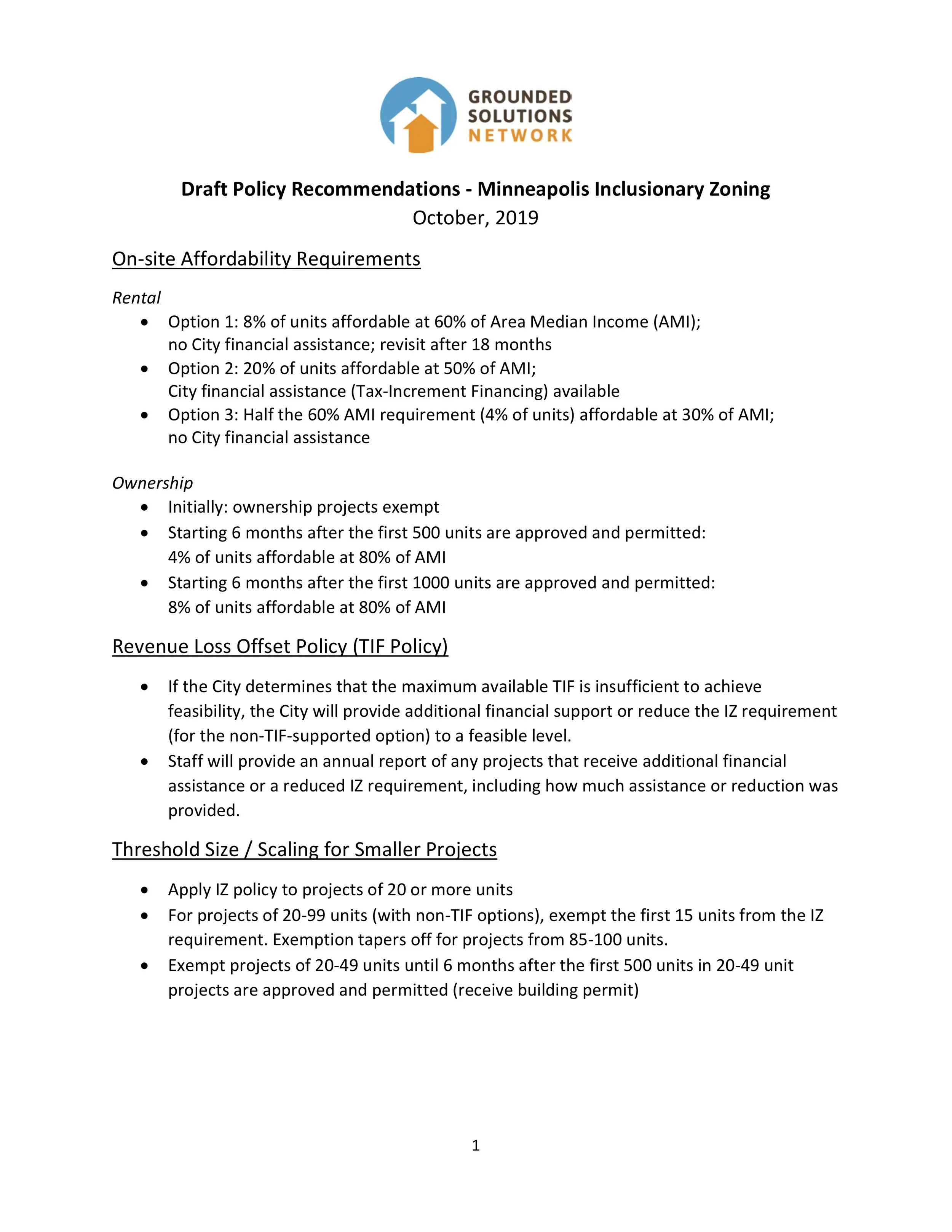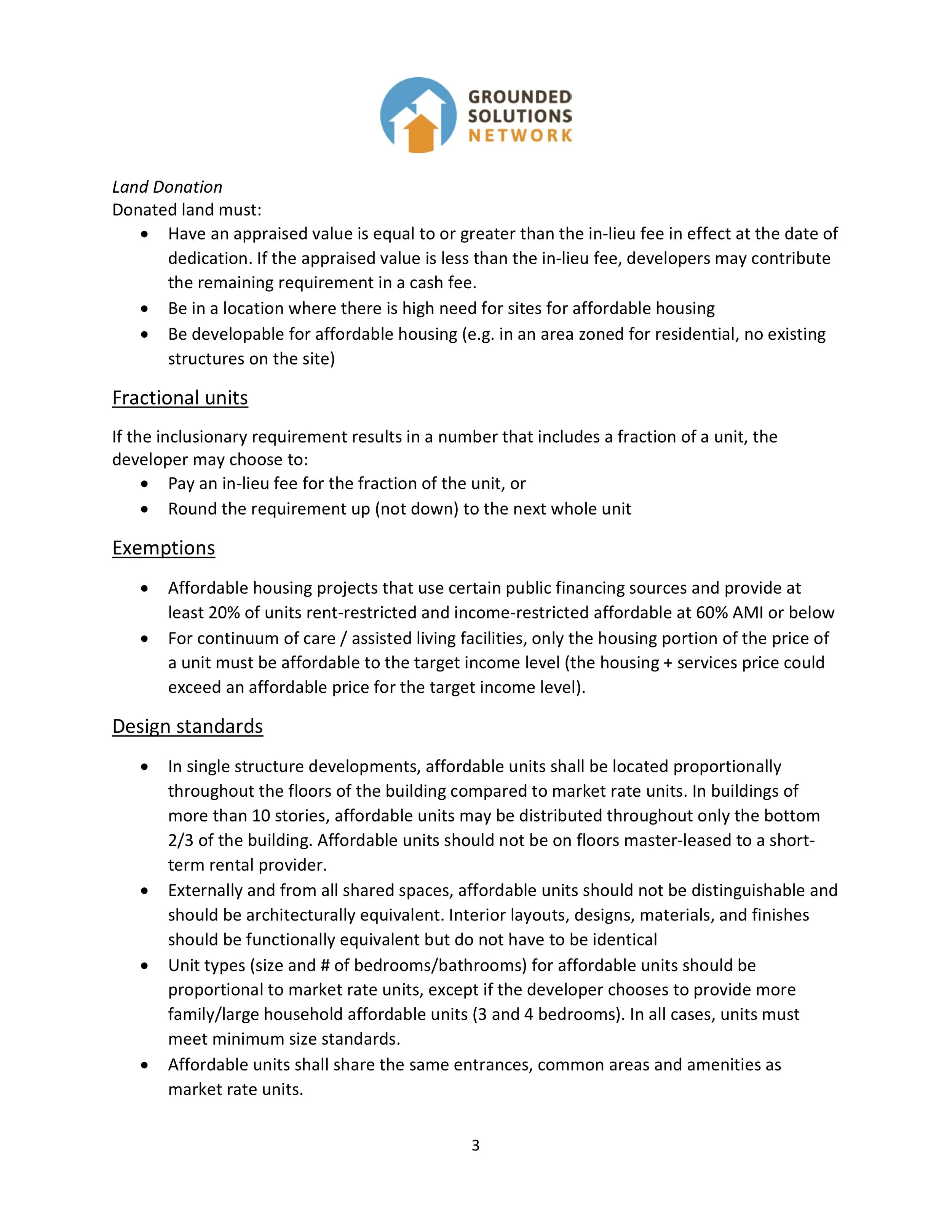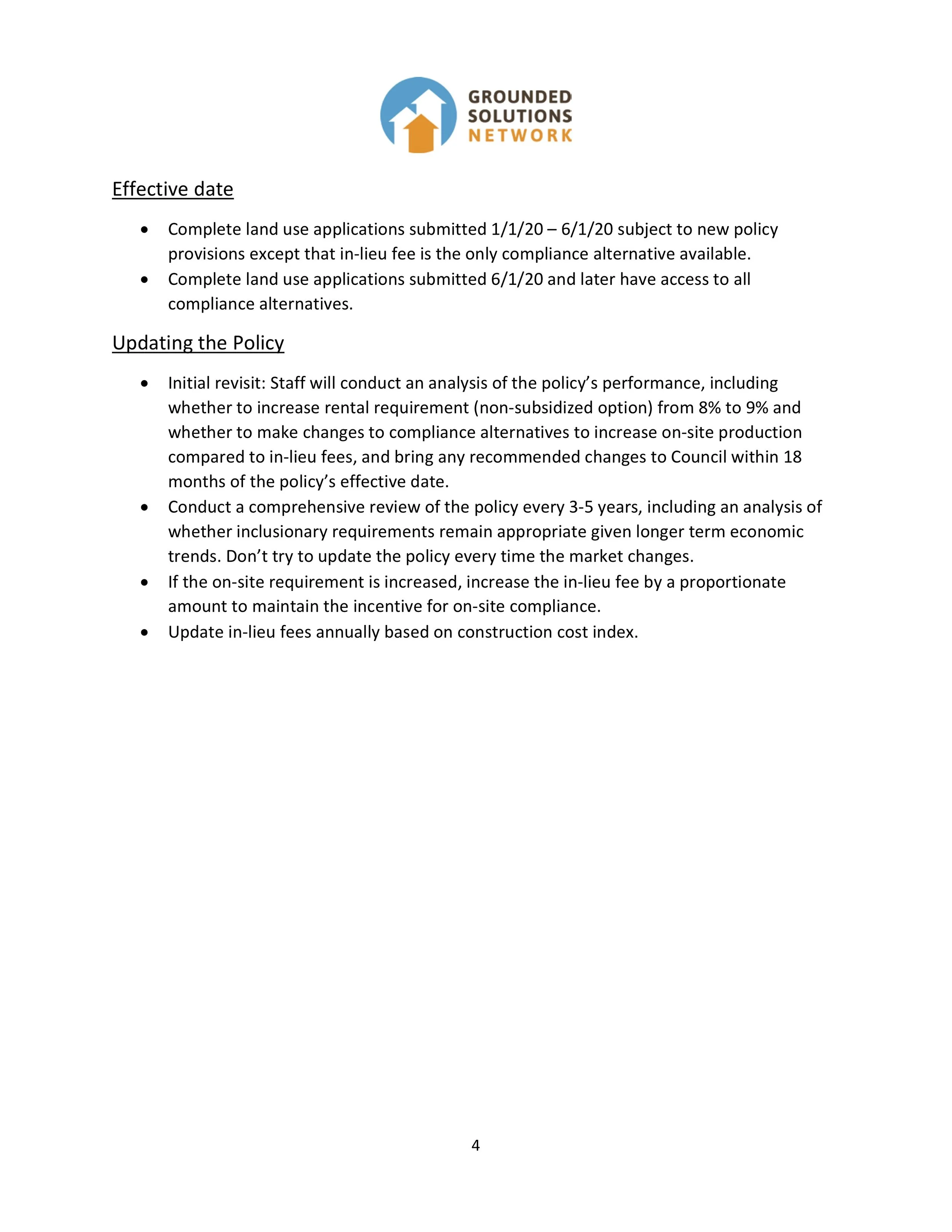
The City Council will be considering amendments to the City’s Unified Housing Policy and Revenue Loss Offset Assistance Policy in connection with development of a permanent Inclusionary Zoning Policy. Inclusionary zoning is intended to advance the City’s housing goals by ensuring that affordable housing is provided in new residential or mixed-use developments (see Background section below). The attached document summarizes the draft policy recommendations that will be considered by the City’s Housing Policy and Development Committee on December 4th.
Public comments are being accepted on these policy recommendations until 4:00pm on December 2. Submit your comments via e-mail to Emily Carr, Senior Project Coordinator, Department of Community Planning and Economic Development emily.carr@minneapolismn.gov.
If you or your group would like to meet to discuss the proposed policy changes, or if you have questions, please contact Emily Carr.
It is expected that the permanent Inclusionary Housing policy will be considered at the following meetings of the City Council:
Wednesday, December 4, 2019 at 1:30pm –– Housing Policy & Development Committee
Friday, December 13, 2019 at 9:30am –– City Council
Additional information on Minneapolis Inclusionary Zoning is available here.
Background
On February 9, 2018, City Council President Lisa Bender introduced subject matter to establish an inclusionary zoning (housing) ordinance.
Since 2003, the City of Minneapolis has implemented housing policy that requires affordable housing units in residential and mixed-use projects with 10 or more units that receive financial assistance from the city. The policy was expanded to apply the affordable housing requirement to projects receiving pass-through funding from the city (state or federal funds), and projects developed on property or a portion of property owned by the city.
In 2017, the City engaged a consultant, Grounded Solutions Network, to conduct financial feasibility analysis and policy research regarding national best practices to inform recommendations for additional inclusionary housing policy options for the city. Their report included pros and cons of different policy choices, and case studies of three other cities with inclusionary housing policies. This work was supported by a team of City staff from Community Planning and Economic Development (CPED) Housing, Development Services, and Long-Range Planning divisions, City Attorney’s Office and the Finance and Property Services department. Grounded Solutions Network solicited input from private developers and affordable housing advocates in this process.
The Grounded Solutions Network report was presented to the Housing Policy & Development Committee of the City Council on August 22, 2018. The report informed an inclusionary housing policy framework adopted by the City Council on December 7, 2018, concurrent with the Comprehensive Plan (Minneapolis 2040). The City Council directed staff to develop a comprehensive inclusionary housing policy consistent with this framework in 2019. Also on December 7, 2018, the City Council approved amendments to the Unified Housing Policy and the Minneapolis Zoning Code to allow for an “Interim” inclusionary zoning ordinance and inclusionary housing policy, to be in place from January 1, 2019 until the permanent policy is adopted and takes effect. The interim ordinance only applies to projects that need re-zoning and/or substantial additional development capacity of 60% or more, exempts ownership housing and housing primarily targeted to students.
In early 2019, the City conducted a request for proposals (RFP) and again engaged Grounded Solutions Network to assist with the development of a permanent inclusionary zoning policy and implementation program. This work is underway, supported by the inter-departmental staff team and involves stakeholder engagement, interviews, research and technical assistance. On July 16, 2019 Grounded Solutions Network conducted stakeholder meetings with developers and affordable housing advocates on potential compliance alternatives for inclusionary housing policies, and on July 17, 2019, Grounded Solutions Network presented an overview of the main types of compliance alternatives and their pros and cons to the Housing Policy and Development (HPD) Committee. Compliance alternatives allow choices other than developing affordable housing units on site. Input shared at the stakeholder meetings and during the HPD Committee discussion has informed draft policy recommendations.